




Birch hello@joinbirch.org Call (832) 359-1399
Worried about how it gets paid for? Five minutes tells us enough to be useful. Free, and it commits you to nothing.
The funding check Book a tour
A young man paying for his own groceries at a store counter while a Birch support worker stands alongside him.

Texas Medicaid care and support

Progress you can see in everyday life.

We support children, young people and adults with intellectual and developmental disabilities across Texas. Skills, socialization and job placement, through HCS and TxHmL.

Prefer to talk? Call (832) 359-1399. A person answers.

Licensed by the Texas Health and Human Services Commission. Homes in Houston and the surrounding counties.

Daily note 14 May

Today Jordan paid on his own at the store. He checked the total, used his card, and put the receipt in his wallet.

— Team Birch

Who we support
Ages 10 and up
Service
Skills, socialization and job placement
Where
Houston and surrounding counties
Programmes
HCS · TxHmL
Referral reply
Within 1 working day

Where we start

Care should help with real life.

Someone may want to cook a meal. Do their own laundry. Handle their own money. Get a job. Tell people what they want. Make friends. Feel calmer in a place they do not know. Or just need less help with something they do every day.

Those goals are different for every person. That is where Birch starts.

We ask first

We do not decide what a good life should look like for someone. We ask them what they want. Then we work out what support might help them get there.

We practise in real places

If someone wants to cook, we cook in their kitchen. If they want a job, we practise the interview. If they want to use the bus, we get on the bus.

We check what is changing

Could they do it again? Somewhere else, with someone else, a month later? How much help did they need this time? That is how progress becomes something you can see.

What we provide

Medicaid-funded support for everyday life.

Birch is a Texas Medicaid disability care provider. We provide Individualized Skills and Socialization, and we help people find work and training.

That name is complicated. What it means day to day is simple, and you can open any of these to see it.

Everyday skills

Cooking a meal from start to finish. Laundry. Money. Personal care. Keeping a routine going without being reminded. Practised in their own kitchen and their own neighbourhood, because a skill learned in a training room is a skill for training rooms.

Job placement and training

Getting ready for work, practising interviews, and getting people onto training programmes that take people with disabilities seriously. Where someone wants a job and it is realistic, we work on it properly.

Community

Going to real places. Using local services. Joining things. Real places have queues and noise and things out of stock, which is exactly why they are worth practising in.

Communication

Making choices. Asking for help. Saying no and being heard. For a lot of people this is the goal that changes everything else.

Relationships

Time with other people. Friendships. Being part of a group. People try harder things when they already feel they belong somewhere, so this comes first.

Independence

Doing more with less help, where that is what the person wants. Less help is not always the goal. Sometimes the goal is a better day. We ask.

A young woman preparing a salad in a home kitchen with a support worker beside her.
Cooking, in her own kitchen, with the help stepping back.
A young woman folding laundry on her bed with a Birch support worker sitting beside her.
Laundry. Unglamorous, and one of the first things people want to do themselves.
A young man using a wheelchair choosing vegetables at a grocery store with a support worker.
Choosing what he actually wants to eat this week.
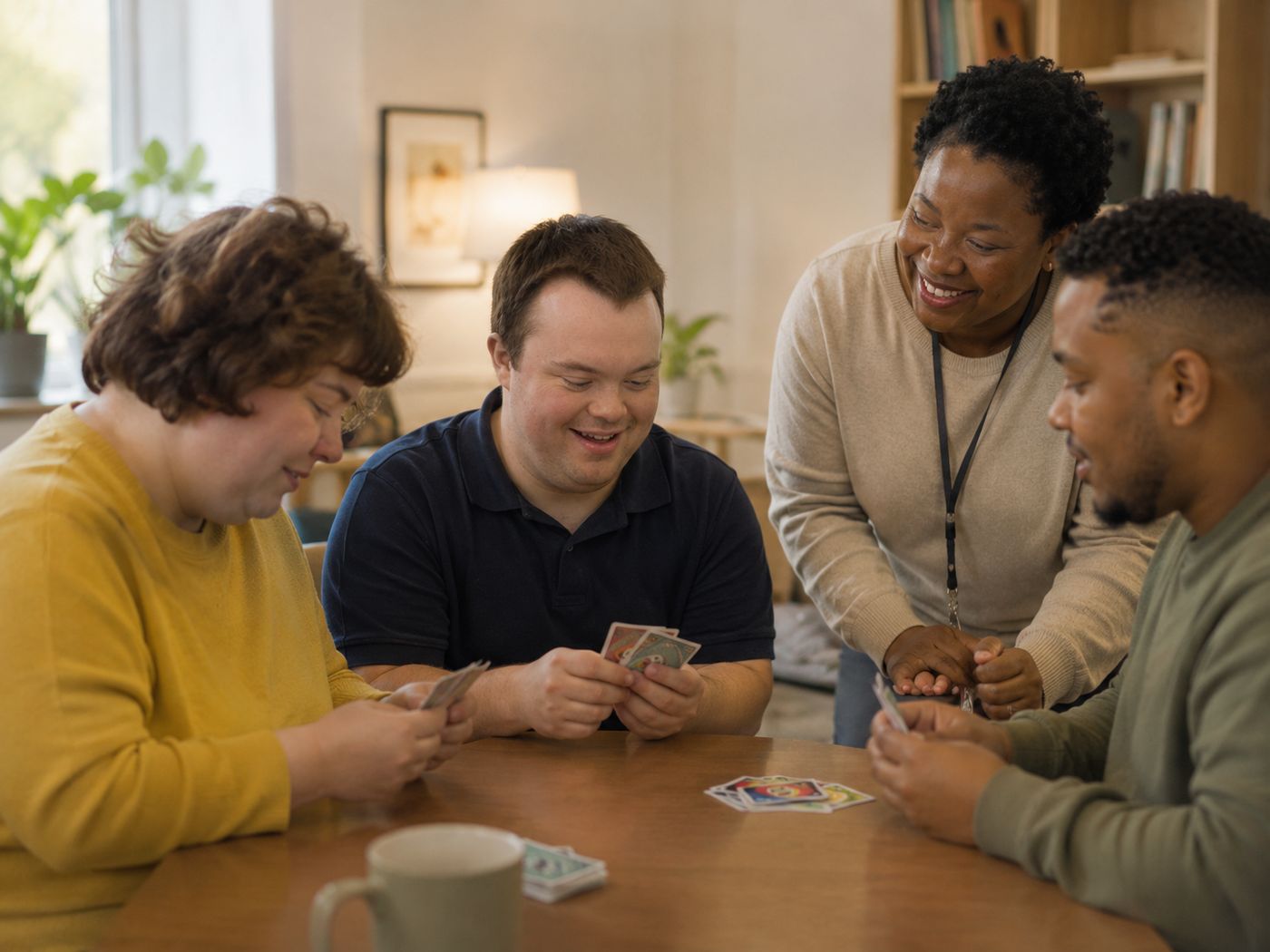
Several people playing a card game around a table with a support worker joining in.
Time with other people is part of the support, not a break from it.

Job placement and training

After eighteen, most people are quietly written off.

School ends and the plan ends with it. There is college, there is nothing, and for a lot of people with an intellectual or developmental disability there has never been a third thing.

There is one. Not for everybody, and we will not pretend otherwise. But for the people it fits, it is the difference between a life and a schedule.

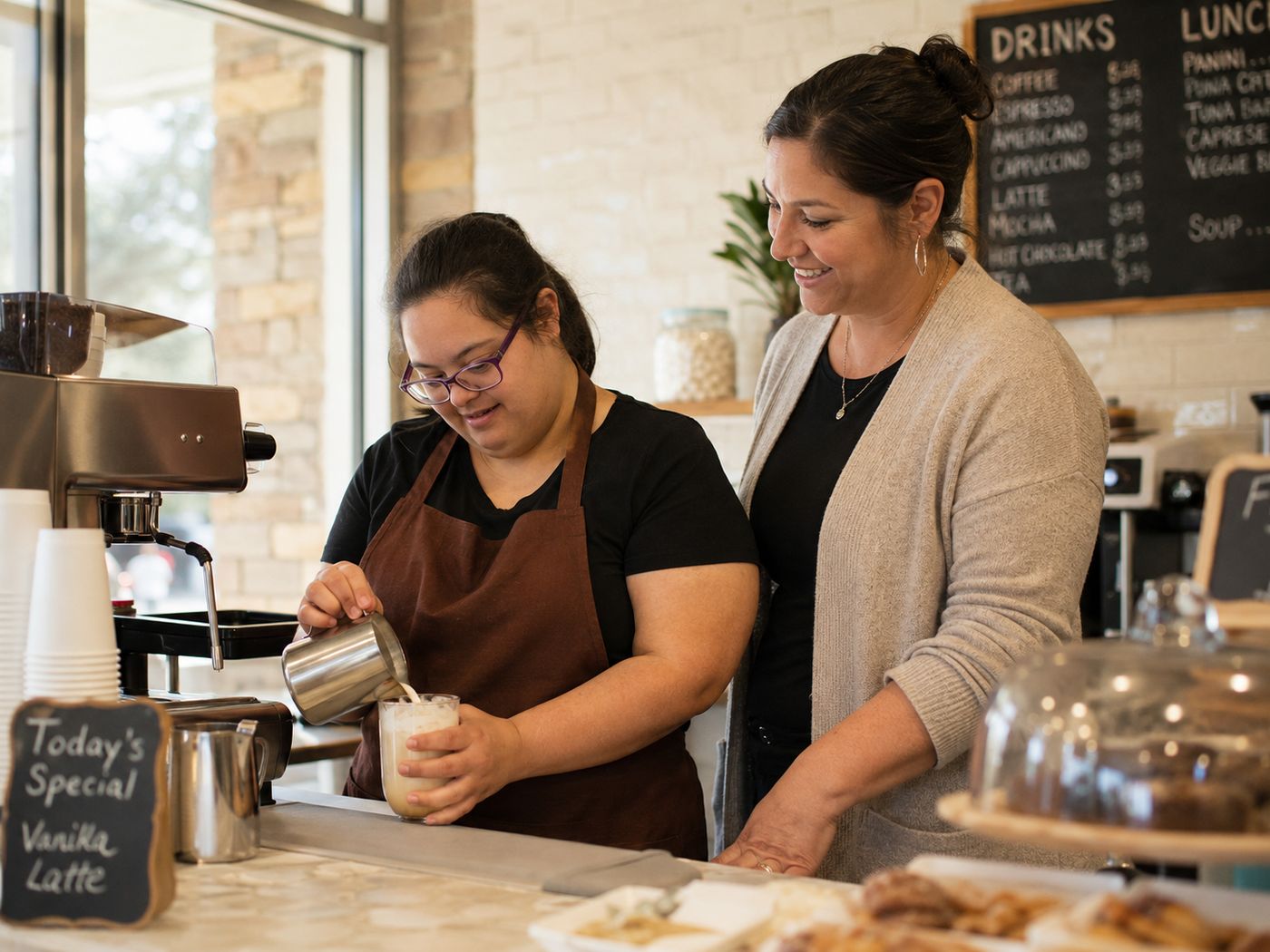
A young woman with Down syndrome making a latte behind a cafe counter while a job coach watches.
Six weeks of practice before the first shift.
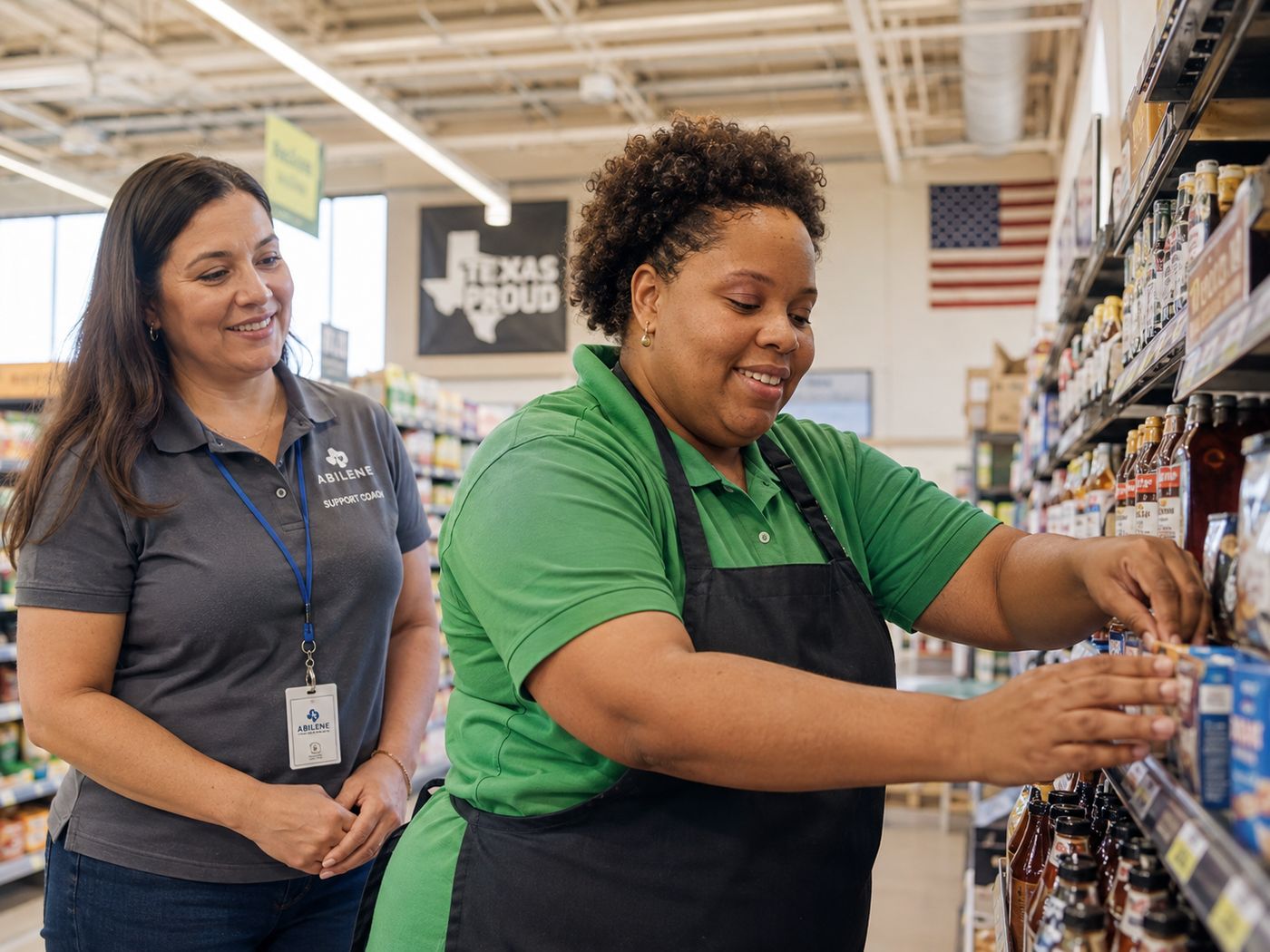
A woman in a supermarket uniform facing up shelves while her support coach stands nearby.
Paid work, in a real store, on a real rota.
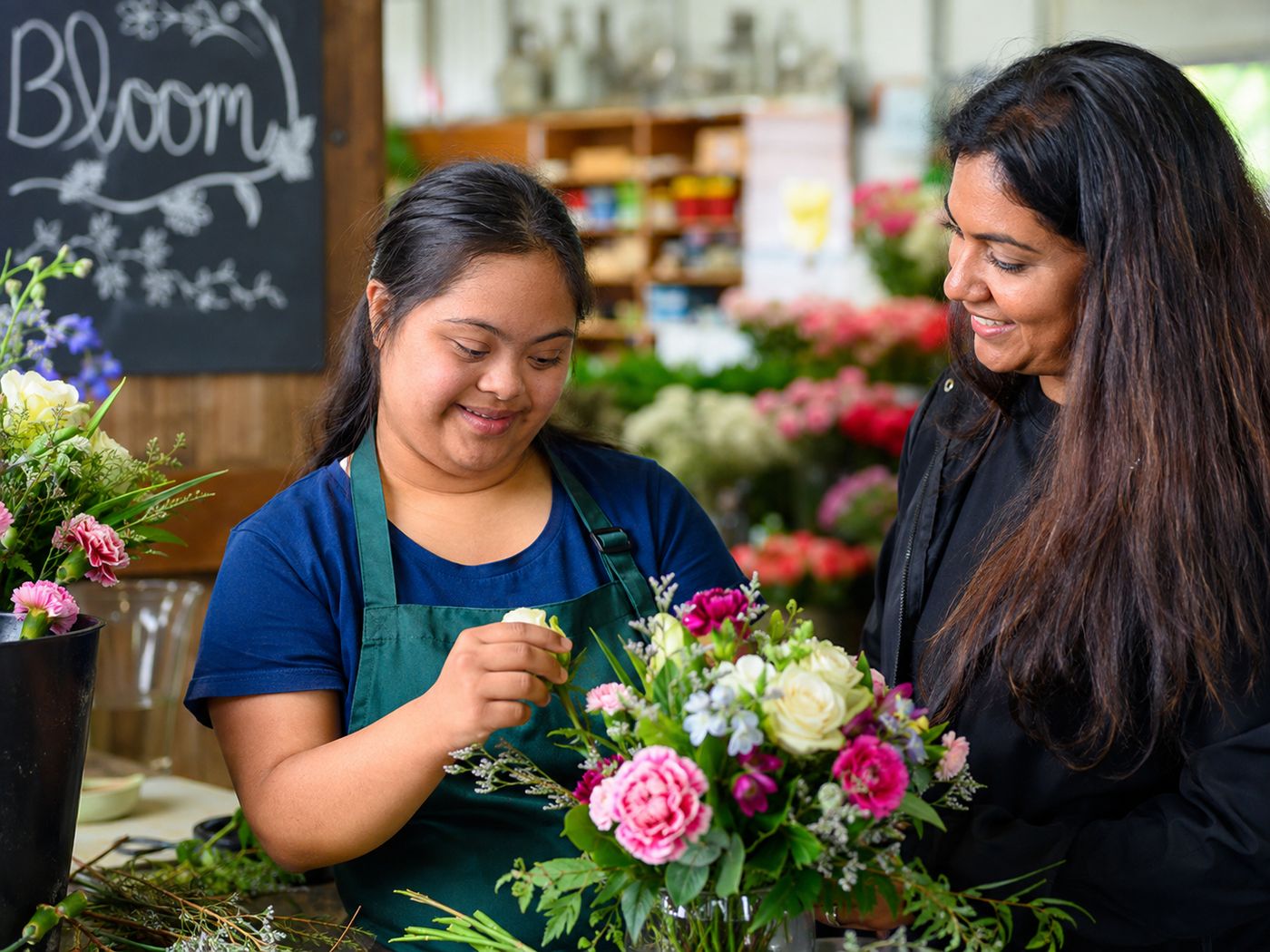
A young woman with Down syndrome arranging flowers in a florist shop alongside a colleague.
She asked for something with her hands. This is what came up.
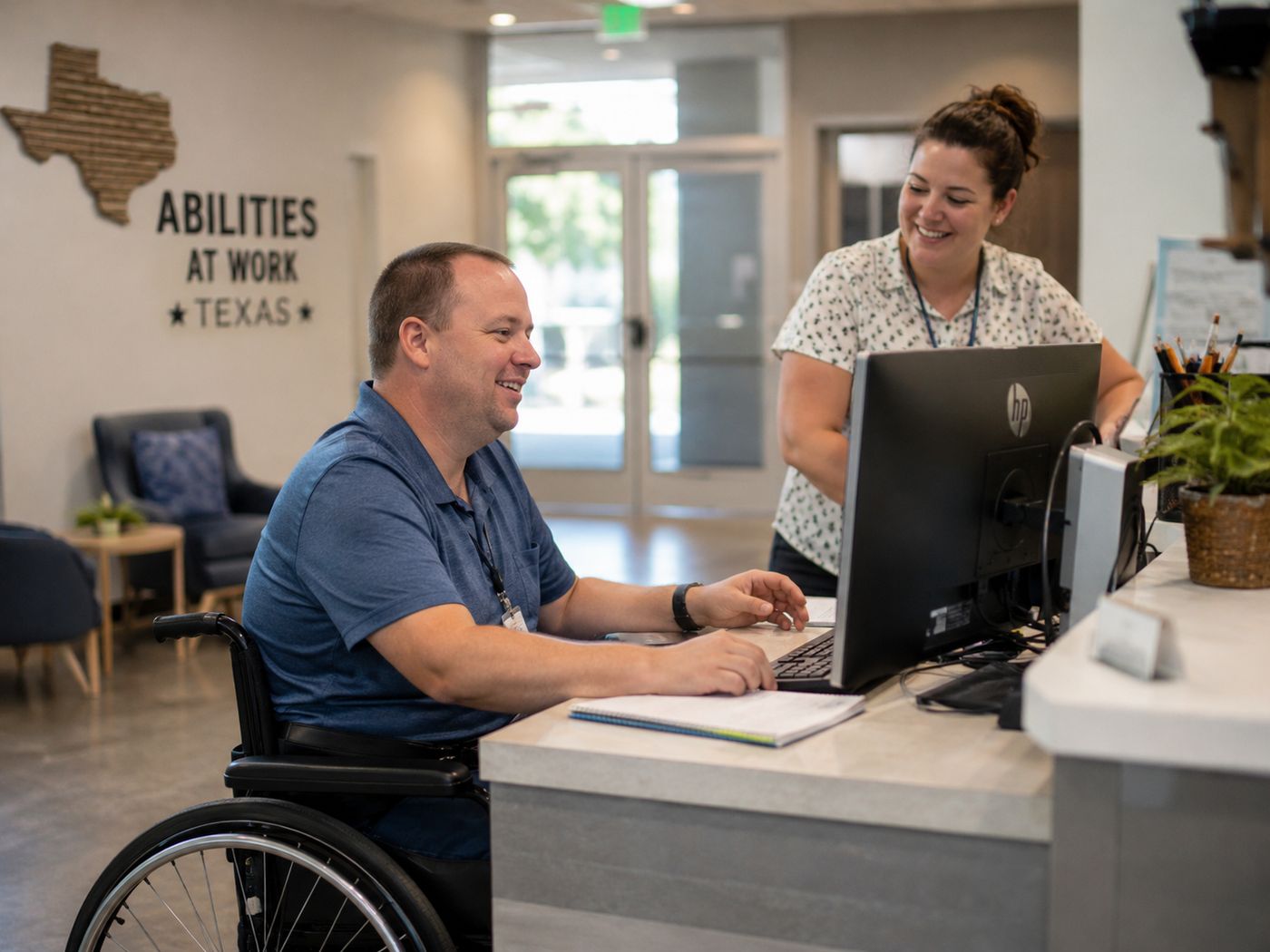
A man using a wheelchair working at a reception desk with a colleague beside him.
Front desk. He knows every name that comes through it.
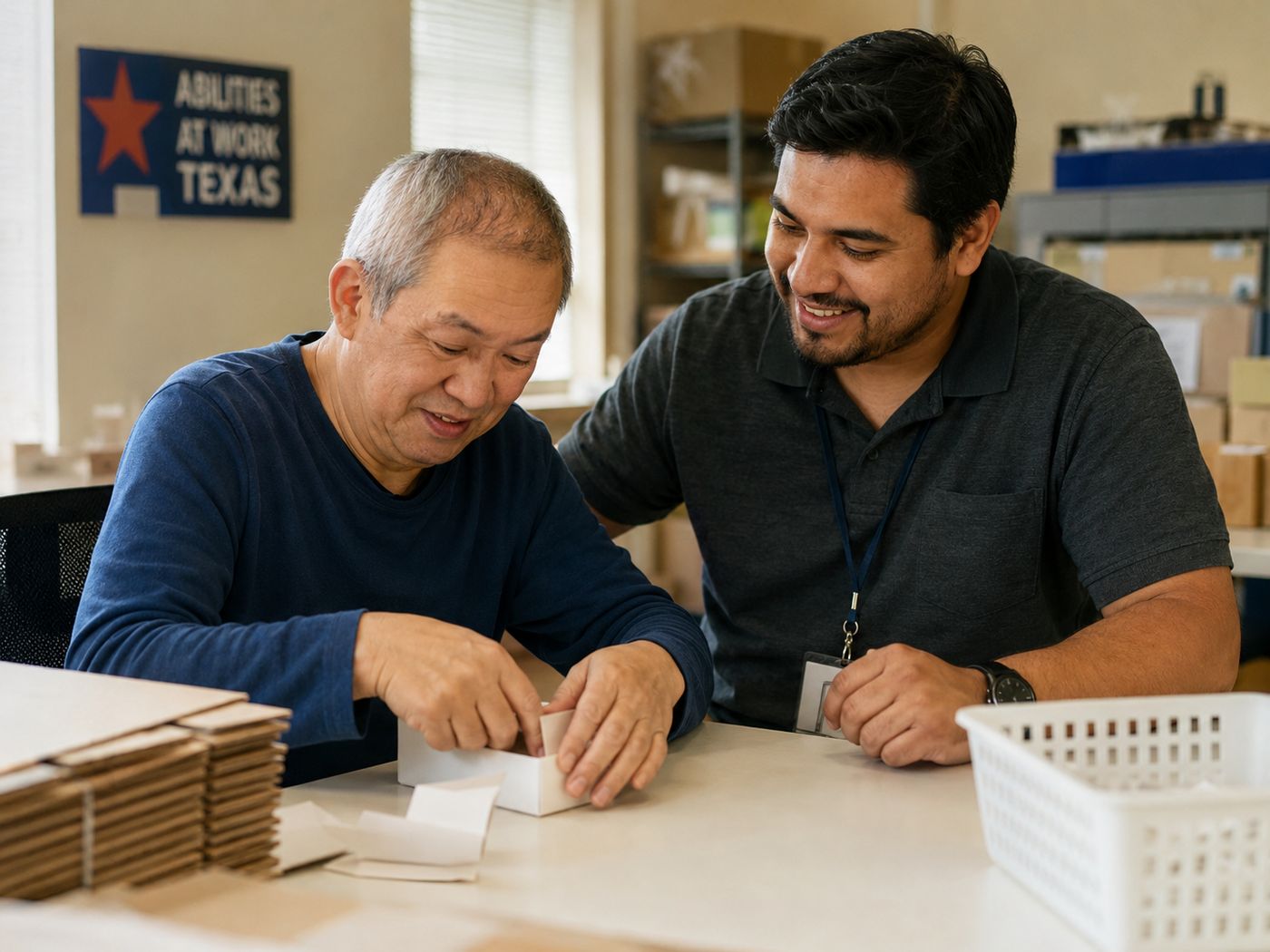
An older man assembling boxes at a work programme while a support worker sits with him.
Nobody is too old to start. He began at sixty-one.
What a work goal actually looks like

It starts a long way back from a job. Getting there and back on your own. Managing a shift's worth of time. Asking a manager a question. Handling it when something changes. We work on those, and we tell you honestly how far along someone is.

Why we do not list jobs on this page

Because it would not be honest. Employment depends on the person, and a jobs board here would set some people up to fail in public. We do it case by case, with partners who assess properly and place people into roles that hold.

Education counts too

A GED. A certificate from a community college. A course someone finishes because it was theirs. For some people that matters more than a wage, and it is just as much a goal.

Paying for it

Nobody pays us out of their own pocket.

Medicaid pays for this. The hard part is getting Medicaid to say yes, and most families are stuck there rather than stuck on the care.

So we do that part with you. We work out what you qualify for, we sit down and fill the forms in with you, we make the calls, and we tell you where things have got to. You are not handed a list and left to it.

It costs nothing, and you do not have to choose Birch to let us help.

A young man checking a bus route on his phone while his mother stands beside him at the stop.
None of this reaches your family as a bill.

What we take off your hands

Free, always
  • Working out which programme you actually qualify for.
  • Filling in the forms with you, in person or on a call.
  • Chasing the people who have gone quiet.
  • Telling you where it has got to, without you asking.
  • Saying so quickly when the answer is going to be no.
One person, not a queue You get a name and a direct number, and it stays the same person the whole way through.

How progress works

Progress is more than having a good day.

A good day matters. Feeling safe matters. Being somewhere you enjoy matters. But support should also move someone closer to what they want from their life.

So we look for change over time. Here is what that looked like for one goal.

The goal: take the bus to see a friend

Marcus, 34. Eleven weeks.

At first
Someone else found the right bus and paid the fare. Marcus waited to be told what to do.
What he wanted
We asked him. He wanted to visit a friend across town on his own, without arranging a lift first.
What we worked on
Reading the route. Finding the stop. Paying. Knowing where to get off. Knowing what to do if the bus does not come.
What went wrong
We changed the route and it fell apart. Different stop, different machine, and he was stuck. He had learned that one journey, not the skill.
What we changed
Three different routes, at different times, with different staff. Slower, and it took another month.
Where he got to
Travelling on four routes without help. He takes a photo of the stop on his phone so he knows what to look for.
A month later
Still doing it. He visits his friend on Saturdays and nobody arranges it for him.

An example of how we work. We will replace it with a real Birch record once we have consent to share one.


A young woman riding a city bus, looking out of the window, with a support worker in the seat behind.
On the bus, on her own route, with the help sitting one row back.

What you hear from us

Know what happened. Know what comes next.

Most families get a text saying "they had a good day". You should know more than that.

After every session we tell you what the person did, what went well, what was difficult, how much help they needed, and what we are working on next. If the day was hard, we tell you that too.

Your service coordinator gets the same picture, written for what they need. Nobody has to chase anybody.

Today at Birch

Tue 14 Oct · Jordan
  • Jordan chose his own lunch and found everything on his list at the store.
  • He paid with help the first time. Later he paid on his own.
  • The store got busy and he wanted to leave early, so we left.
Something to try Next time you shop together, let Jordan pay before you step in.
A young man and his mother reading a Birch progress report together on the sofa.
The six-month report, written so the person it is about can read it too.

A note like this after every session. The good parts and the hard parts, and one small thing you can try.

On your phone

You can see it all as it happens.

Every note, every goal, and how far along it is. Not a summary written at the end of the month. The same information your service coordinator sees.

A preview of the family app.

How we know something is real

Can they still do it somewhere else, with someone else, later?

Doing something once, in one place, with a favourite member of staff, is a good moment. It is not the same as being able to do it.

So we check the same skill in a different place, with a different person, and again a month later. Until all three hold, we say it is still in progress. We will not tell you someone can do something they cannot.

There is no single finish line. One person wants to travel alone. Another wants to be able to say no and be heard. Both are real progress and we do not rank them.

For families

Feel confident about today. See progress over time.

When someone you love needs support, safety comes first. You want to know they are cared for, known, listened to and treated with respect.

But you are also thinking further ahead. Will they be more confident? Will they be able to do more for themselves? Will they have people and places that matter to them? What happens when you cannot do everything?

Nobody can tell you what someone's future will look like. What we can do is take their goals seriously, work on them in real life, and show you exactly what we are seeing. You will never have to guess how it is going.

A mother and her young daughter making sandwiches together in a bright kitchen.
It starts at home, years before anybody calls it a plan.

If Birch is supporting you

This is your life. We start with you.

What do you want to do? What would you like to be easier? Where would you like to go? What would you like to do with less help? What would you like more help with?

You do not have to want the same things as anybody else. Our job is to understand what matters to you, and support you to work towards it.

You can tell us at any time that something is not working. We will change it.

Why Birch exists

Support should not decide someone's limits.

The founder of Birch, photographed outside.
Founder, Birch.

Birch was started by someone who is autistic, and he built this service around one thing he knows first-hand.

People decide what you are capable of before they know you. It happens to people with disabilities constantly. A judgement gets made early, it goes into a file, and from then on everyone treats the file as the person.

Birch works the other way round. We start with the person in front of us, and we find out what is possible by trying.

So we ask
Before we assume. Every plan starts with what the person says they want, not with what the file says they can do.
So we practise
In real places. A training room teaches someone to use a training room.
So we check
Whether a skill holds up elsewhere, with someone else, later on. Anything less is not really progress.
So we tell you
Everything, including the hard days. Families get kept in the dark far too often. Not here.

For service coordinators and hospitals

A provider you do not have to chase.

Does this person fit? Do we have room? Will the service actually be delivered? Will you hear about it? Everything below is here so you can answer all four without calling us first.

And if you are discharging someone whose funding is not sorted, send them anyway. Sorting that out is something we do.

Who we serve
People with intellectual and developmental disabilities, aged 10 and up
Programmes
HCS and TxHmL
Service
Individualized Skills and Socialization, and job placement
Where
Houston and the surrounding counties
Places open now
4 · updated 1 September 2026
Referral reply
Within one working day, measured
No funding in place
Refer them anyway. We look at whether there is a route to funding and come back to you within one working day.
When we say no
If we cannot support someone safely with the staff we have, if the fit is wrong, or if another provider is a better answer. We tell you quickly rather than leave you waiting.

What we measure

If we say we are reliable, we should be able to prove it.

We publish what we can measure, and we update it on the first working day of every month. If a number moves the wrong way, it still goes up.

1 day

Median time a coordinator waits for a reply to a referral.

98%

Reports sent on or before the date they are due.

96%

Planned support delivered as scheduled over the last three months.

Updated 1 September 2026. How each number is worked out is set out under Licensing, rights and safety below.

"I used to get a text saying he had a good day. Now I know he paid for the shopping himself, and that the store was too busy for him. I would rather have that."
Parent, Houston — shared with permission
"I have sixty-something people on my caseload. Birch is the one I do not have to think about, because they tell me before I have to ask."
Service coordinator, Harris County — shared with permission

One minute

Is Birch right for you?

Three questions and an honest answer straight away. You do not need to understand the Texas system before you contact us.

1. Who is the support for?
2. Where in Texas are they?
3. Which Medicaid programme do they use?

Answer the three questions and we will tell you straight away whether Birch is likely to be able to help.

Book a tour

Come and look before you decide anything.

Come and see a home. Meet the people who would be supporting your family member. Ask us anything, including the questions that feel rude.

If you would rather hold a place while the funding gets sorted, say so and we will hold one. It costs nothing and it does not commit you.

We are in Houston and the counties around it, and we open new homes where the demand is. Put your ZIP in and we will tell you straight away.

Only if you have one to hand. Leave it blank otherwise.

We call back the same working day.

This goes to two people at Birch. We use it to call you back and to keep track of where you are, so you are not explaining yourself from scratch every time. Ask us to delete it and we will.

Talk to Birch

The first conversation is simple.

Tell us about the person. What matters to them. What support they have now. Where you have got to with the funding, if anywhere. And what you would like to be different.

We will tell you whether Birch looks like the right fit. If it is not, we will say so, and we will point you somewhere better.

hello@joinbirch.org
Monday to Friday, 7:30am to 6:00pm
Houston, Texas. We share home addresses when you book a visit.

What happens after you call

About 15 minutes
  • We ask about the person, not about paperwork.
  • We work out together where you are with the funding.
  • You get one next step, in writing, the same day.
  • If Birch is not right, we say so on the call and tell you who is.
No cost, no commitment This conversation is free even if you never become a Birch family.

Licensing, rights and safety

The formal things, in one place.

Nobody should have to hunt for this. Last updated 1 September 2026.

How we are licensed

Birch is licensed by the Texas Health and Human Services Commission and is inspected by them. Ask us for our licence details and inspection history and we will send them the same day, in writing.

You do not have to take our word for it. HHSC publishes provider records, and we will give you the direct link to ours on request.

How our numbers are worked out

Referral reply is the median hours between a referral arriving and a named person answering it. Reports on time counts reports sent on or before their due date, divided by all reports due. Support delivered counts sessions that ran as planned, divided by all sessions booked, with family cancellations excluded and our own included.

We recalculate all three on the first working day of the month.

Raising a concern

Tell us first if you can. Call (832) 359-1399 or email hello@joinbirch.org. We respond to every complaint within two working days, and in writing within ten.

You can also complain directly to Texas HHSC at any time, without telling us. That is your right, it will not affect anyone's place with us, and we will help you do it if you want us to.

Rights

Everyone Birch supports has the right to be safe, to be treated with respect, to have their choices asked for and listened to, and to have their information kept private. You have the right to see everything we write, to correct it, and to withdraw consent for anything at any time.

Non-discrimination

Birch does not discriminate on the basis of race, colour, national origin, age, disability, sex, gender identity, sexual orientation, religion, or ability to speak English. This applies to who we serve, how we support them, and who we employ.

Privacy and photographs

We never publish anyone's photograph or name, or anything about their health, without written permission, and permission can be withdrawn at any time with no explanation needed. Session updates go only to the people you name. The photographs on this site are stock images and are not people we support.

Help with funding

Our funding help is free, it is not legal advice, and it does not commit you to using Birch. We explain how the Texas programmes work and we help you apply. Programme rules change and local authorities vary, so we check things rather than assume them. If you spot something out of date on this site, tell us and we will fix it and say when.

Access and language

This site is built to WCAG 2.2 AA. Everything is available in English and Spanish, and we provide interpreters for other languages at no cost to you. If any part of this site is hard to use, tell us and we will fix it.